
Blue Light Filtering Contacts: 10 Things to Know Before You Buy
More people now choose blue light filtering contacts because they spend long hours on phones, computers, tablets, and other digital devices. If your eyes feel tired after a full day of screen time, you may wonder whether contacts with blue light blocker technology can help.
One of the best-known options is ACUVUE OASYS MAX 1-DAY 30 lenses. ACUVUE created these daily disposable lenses for modern digital lifestyles and added OptiBlue Light Filter technology, which filters about 60% of blue-violet light.
But what do blue light filtering contacts actually do? Are Acuvue blue light contacts better than regular contact lenses? And can they really provide digital eye strain relief?
Here are 10 important things to know before choosing blue light filtering contact lenses.
1. Blue light filtering contacts support screen-heavy lifestyles
Blue light filtering contacts use built-in technology to filter part of the blue-violet light spectrum. Like regular contact lenses, they still correct vision, but they also include an additional light-filtering feature.
This makes them especially interesting for people who spend a lot of time working on computers, reading on tablets, watching videos, gaming, or using smartphones throughout the day.
Modern contact lenses now do more than correct vision. Many brands focus on comfort, moisture, glare reduction, UV protection, and lifestyle needs. This newer generation of lens technology fits the way people use their eyes today.
2. They do not block all blue light
The phrase “blue light blocker” can sound stronger than it really is. These lenses do not block all blue light. Instead, they filter selected blue-violet wavelengths while still allowing natural vision.
Your eyes still need visible light to see clearly. If a lens blocked too much light, colors could look unnatural, and your vision quality could change.
So when people talk about contacts with blue light blocker technology, think of them as contacts that reduce part of blue-violet light, not lenses that completely block blue light.

3. ACUVUE OASYS MAX 1-Day is one of the main options
If you are looking for Acuvue blue light contacts, ACUVUE OASYS MAX 1-DAY 30 lenses are one of the most relevant products currently available.
These lenses combine OptiBlue Light Filter technology with TearStable Technology, which helps support moisture and comfort throughout the day. They also come as daily disposable lenses, so you wear a fresh pair every day and throw them away after use.
That makes them a good option for contact lens wearers who want convenience, comfort, and advanced light-filtering technology in one lens.
4. Digital eye strain is not only about blue light
Many people blame blue light for tired eyes, but several factors usually contribute to digital eye strain at the same time.
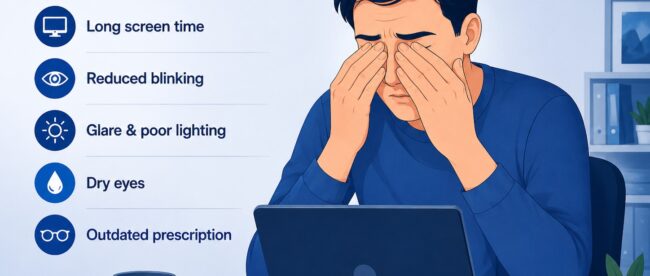
Your eyes may feel tired because you focus at the same distance for too long. Screen use can also make you blink less, which may cause your contact lenses to feel dry. Glare, poor lighting, small text, outdated prescriptions, and long working hours can also increase discomfort.
That is why you should not see blue light filtering contacts as a magic solution. For some wearers, they may support better comfort, but they work best when you combine them with healthy screen habits.
For more background, read: Do Contact Lenses Help with Computer Eye Strain?
5. Blue light filtering contacts are different from blue light glasses
Blue light glasses sit in front of your eyes, while blue light filtering contacts sit directly on your eyes. This creates a different wearing experience.
With glasses, the filter stays in the frame. Contact lenses move with your eyes, so the filtering effect follows your line of sight. This can help if you already prefer contact lenses and do not want to wear glasses over them.
However, contacts do not suit every person better than glasses. Some people like blue light glasses because they can take them off easily. Others prefer contact lenses because they want clear vision without frames.
The better choice depends on your prescription, comfort, eye health, and daily routine.

6. You should understand the benefits realistically
Blue light filtering contacts may help reduce some visual discomfort in bright or screen-heavy environments. Some wearers may notice less glare, better visual comfort, or less harshness from screens and indoor lighting.
However, scientists still debate how much blue light filtering helps with digital eye strain. Research on blue light filtering glasses has not clearly proven that they reduce short-term computer-related eye strain better than regular lenses.
This does not mean blue light filtering contacts have no value. Instead, it means you should keep expectations realistic. The technology may support comfort, but it does not guarantee digital eye strain relief.
If your eyes feel painful, red, very dry, or blurry, speak with an eye care professional.
7. Daily disposable lenses may help with comfort
ACUVUE OASYS MAX 1-Day gives wearers one major advantage: daily replacement. You start every day with a fresh, clean pair of lenses.
Many people like daily disposable contacts because they offer a simple routine. You do not need nightly cleaning, lens cases, or contact lens solution. This can help people who work long days, travel often, or want an easier lens schedule.
If screen time makes your eyes feel dry, the daily disposable design may matter just as much as the blue-violet light filtering feature.
8. Multifocal wearers also have a blue light filtering option
Screen use can become more difficult with age, especially when near vision starts to change. If you are over 40 and find it harder to read your phone, laptop, or small text, you may need multifocal contact lenses.
For this group, ACUVUE OASYS MAX 1-DAY MULTIFOCAL 30 pack may be a useful option.
These lenses help people see at different distances. By combining multifocal correction with modern comfort and blue-violet light filtering technology, they may suit people who move between computer screens, phones, printed text, and distance vision throughout the day.
9. Light-adaptive contacts are related, but not the same
Another advanced lens option is ACUVUE OASYS with Transitions.
This lens technology works differently from ACUVUE OASYS MAX 1-Day. Instead of focusing mainly on blue-violet light filtering, ACUVUE OASYS with Transitions reacts to changing light conditions. That feature may help people who feel sensitive to bright light or glare.
So if long screen time is your main concern, blue light filtering contacts may fit your needs better. When changing light, outdoor brightness, or glare bothers you more, light-adaptive contacts may also be worth considering.
You can learn more about future lens technology here: Future Contact Lenses: What Can You Expect?
10. Good screen habits still matter
Even the best contact lenses cannot replace healthy screen habits.
If you spend hours looking at screens, try using the 20/20/20 rule. Every 20 minutes, look at something about 20 feet away for 20 seconds. This simple habit gives your focusing muscles a short break.
You should also blink more often, adjust screen brightness, reduce glare, keep your screen at a comfortable distance, and make sure your prescription stays up to date.
For more tips, read: 20/20/20 Rule for Eye Health: How to Protect Your Vision from Screen Time
Are blue light filtering contacts worth it?
Blue light filtering contacts may be worth considering if you already wear contact lenses and spend a lot of time on digital devices. They can be a smart choice for office workers, students, gamers, remote workers, drivers, and anyone who wants modern lens technology for today’s screen-heavy lifestyle.
They can work especially well for people who want a daily disposable lens with comfort technology and blue-violet light filtering in one product.
However, they will not solve every eye problem. If your symptoms come from dry eye, an incorrect prescription, astigmatism, presbyopia, or poor lens fit, you may need a different type of contact lens.
For a broader explanation of eye strain symptoms, read: Eye Strain Explained: From Causes to Cures
Best blue light filtering contacts to consider
ACUVUE OASYS MAX 1-DAY 30 lenses
ACUVUE OASYS MAX 1-DAY 30 lenses are a strong choice for people looking for blue light filtering contacts. They offer daily disposable convenience, modern comfort technology, and blue-violet light filtering.
ACUVUE OASYS MAX 1-DAY MULTIFOCAL 30 pack
ACUVUE OASYS MAX 1-DAY MULTIFOCAL 30 pack may suit people with presbyopia who want multifocal vision correction and blue-violet light filtering technology.
ACUVUE OASYS with Transitions
ACUVUE OASYS with Transitions offers a light-adaptive contact lens option for people interested in advanced lens technology for changing light conditions.
Final thoughts
Blue light filtering contacts represent one of the most interesting developments in modern contact lens technology. They support people who live and work in digital environments, where screens, LED lighting, and long hours of near focus shape everyday life.
Products like ACUVUE OASYS MAX 1-Day show how contact lenses now combine vision correction with comfort features and blue-violet light filtering.
Still, you should keep expectations realistic. These lenses may support visual comfort, but they do not guarantee digital eye strain relief. The best results usually come from the right lenses, proper fit, healthy screen habits, regular breaks, and professional eye care.
For people who spend many hours using digital devices and want a modern daily disposable lens, blue light filtering contacts may be worth exploring.
Frequently asked questions
What should readers keep in mind about Blue Light Filtering Contacts: 10 Things to Know Before You Buy?
Confirm the exact brand and all printed parameters, including power and any base curve, diameter, cylinder, axis or add value that applies to the lens. Also compare the replacement schedule and the number of lenses in each box.
What details are worth checking before making a change?
Compare like with like: the same brand, lens type, parameters and pack size. A lower box price may not be the better value if the box contains fewer lenses or follows a different replacement schedule.
When is general information not enough?
An article cannot account for every wearer, lens design or eye-care history. When you are unsure about fit, parameters, symptoms or a change in your routine, use advice from a qualified eye-care professional who can assess your individual situation.
Related posts:


